Dr. Qi Zhu (朱旗教授)
|
|
College of Artificial Intelligence, Nanjing University of Aeronautics and Astronautics (NUAA) Email: zhuqi@nuaa.edu.cn Address: No. 29 Jiangjun Avenue, Jiangning District, Nanjing, China Office: Room 11319, Building 1 [Google Scholar] [ORCID] [Scopus] |

|
|
| Short Bio | Education | Research | Selected Publications | Honors & Awards | Professionals | Research Fund | Resources |
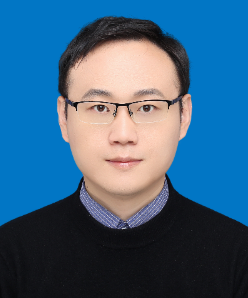
Dr. Qi Zhu is a Professor and PhD Supervisor at the College of Artificial Intelligence, Nanjing University of Aeronautics and Astronautics (NUAA), where he also serves as Associate Dean. He is both a National-level Young Talent and a Jiangsu Province '333' High-level Talent. He received his BSc, MSc, and PhD from the Harbin Institute of Technology, and was awarded the Academic Scholarship for Doctoral Candidates, Ministry of Education, China.
His research interests include brain network analysis, brain-computer interaction, and cross-disciplinary AI applications. He has published over 200 papers, including more than 50 papers in IEEE/ACM Transactions and CCF-A conferences, in venues such as IEEE TMI, IEEE TIFS, IEEE TAFFC, IEEE TIP, IEEE TCBB, Nature Communications, NeurIPS, IJCAI, ACM MM, CVPR, and MICCAI. He has received 3 provincial/ministerial science and technology awards and holds over 30 authorized patents.
He has led 10+ research projects, including 3 grants from the National Natural Science Foundation of China, a defense application promotion project, a sub-project of a National Key R&D Program, and a Jiangsu Natural Science Foundation grant.
If you are interested in related research, please feel free to contact Dr. Zhu by email.
How to contact me: zhuqi@nuaa.edu.cn
- 2010.3 – 2014.3 Harbin Institute of Technology Computer Applied Technology — PhD (Doctor of Engineering)
- 2007.9 – 2009.12 Harbin Institute of Technology Computer Science and Technology — MSc (Master of Engineering)
- 2003.9 – 2007.7 Harbin Institute of Technology Computer Science and Technology — BSc (Bachelor of Engineering)
A selection of recent publications (listed in the order presented on the official homepage; numbering corrected from the source). "*" denotes corresponding author.
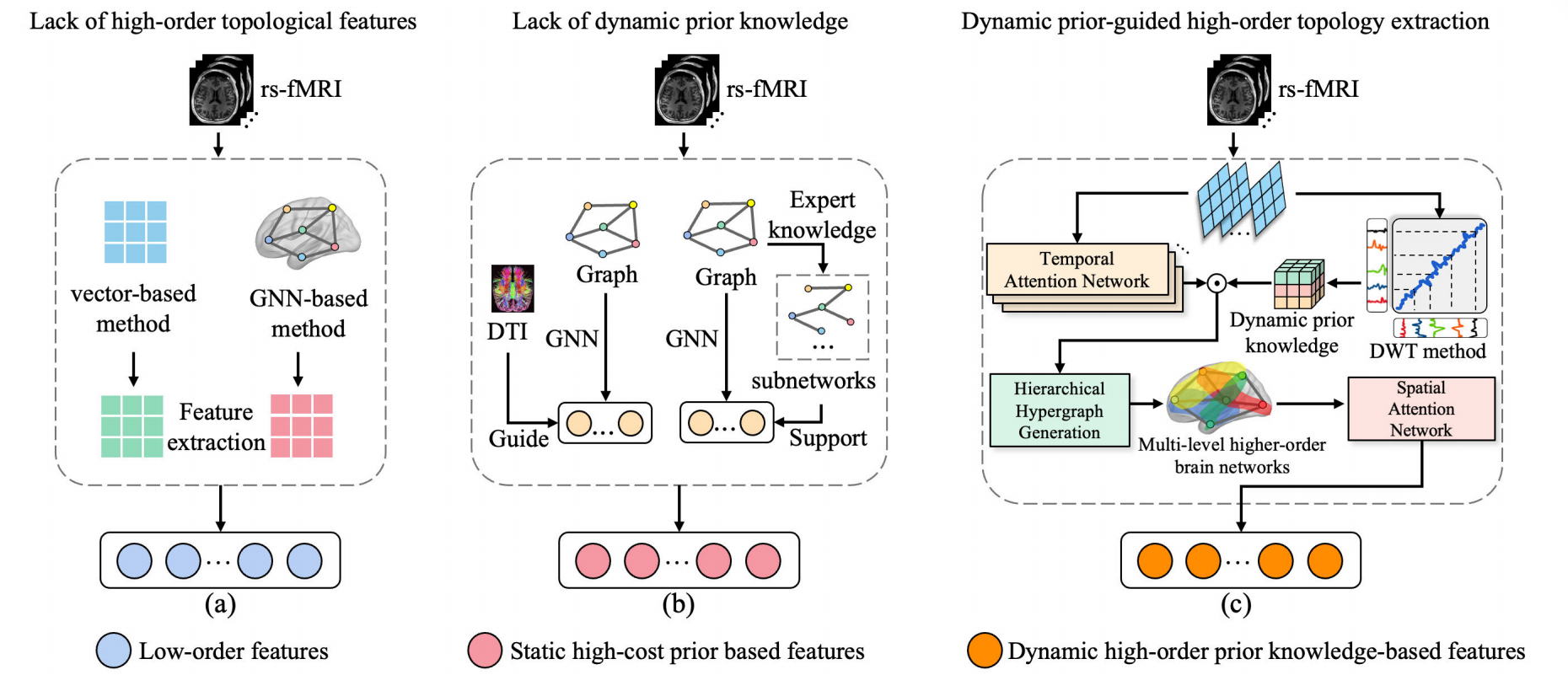
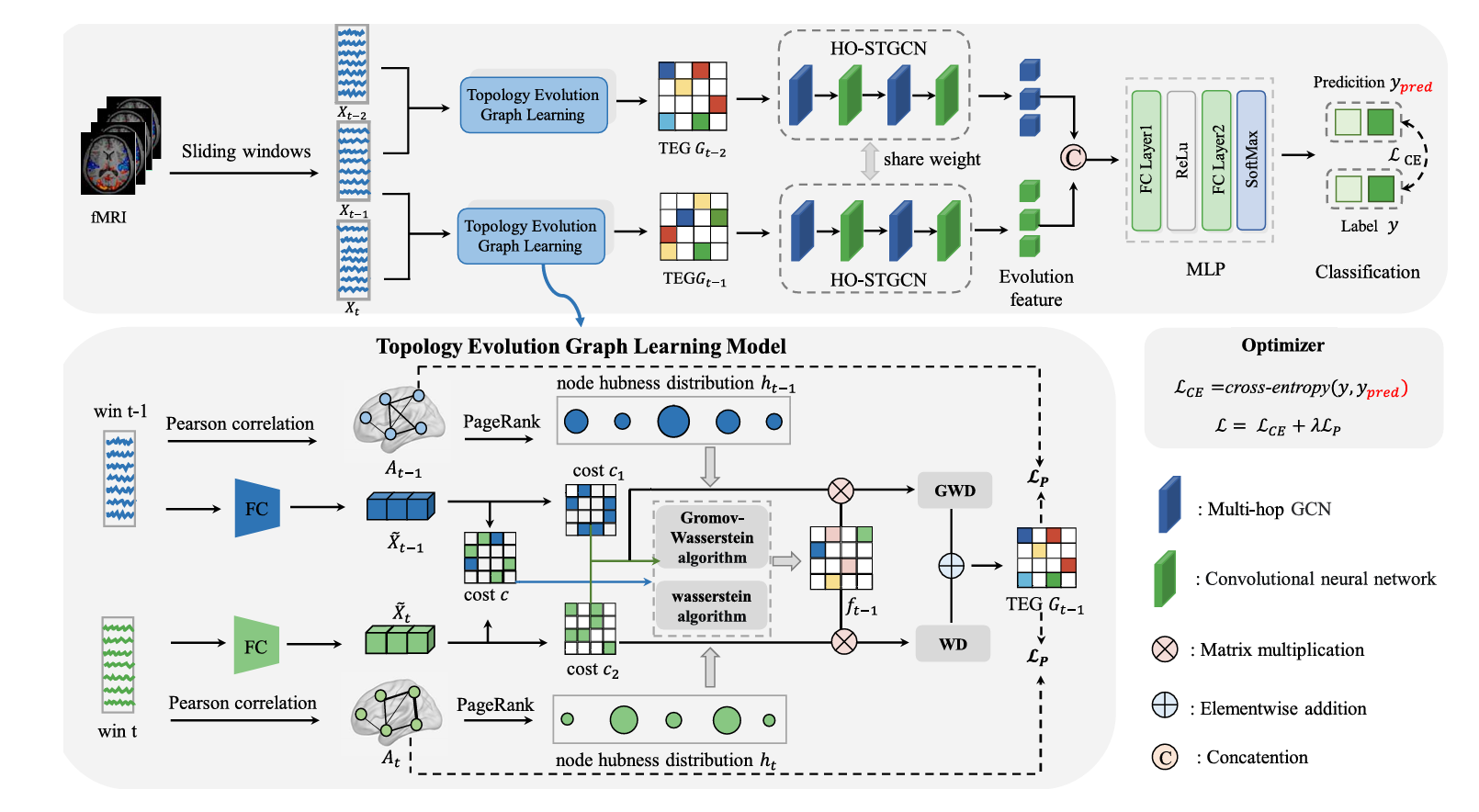
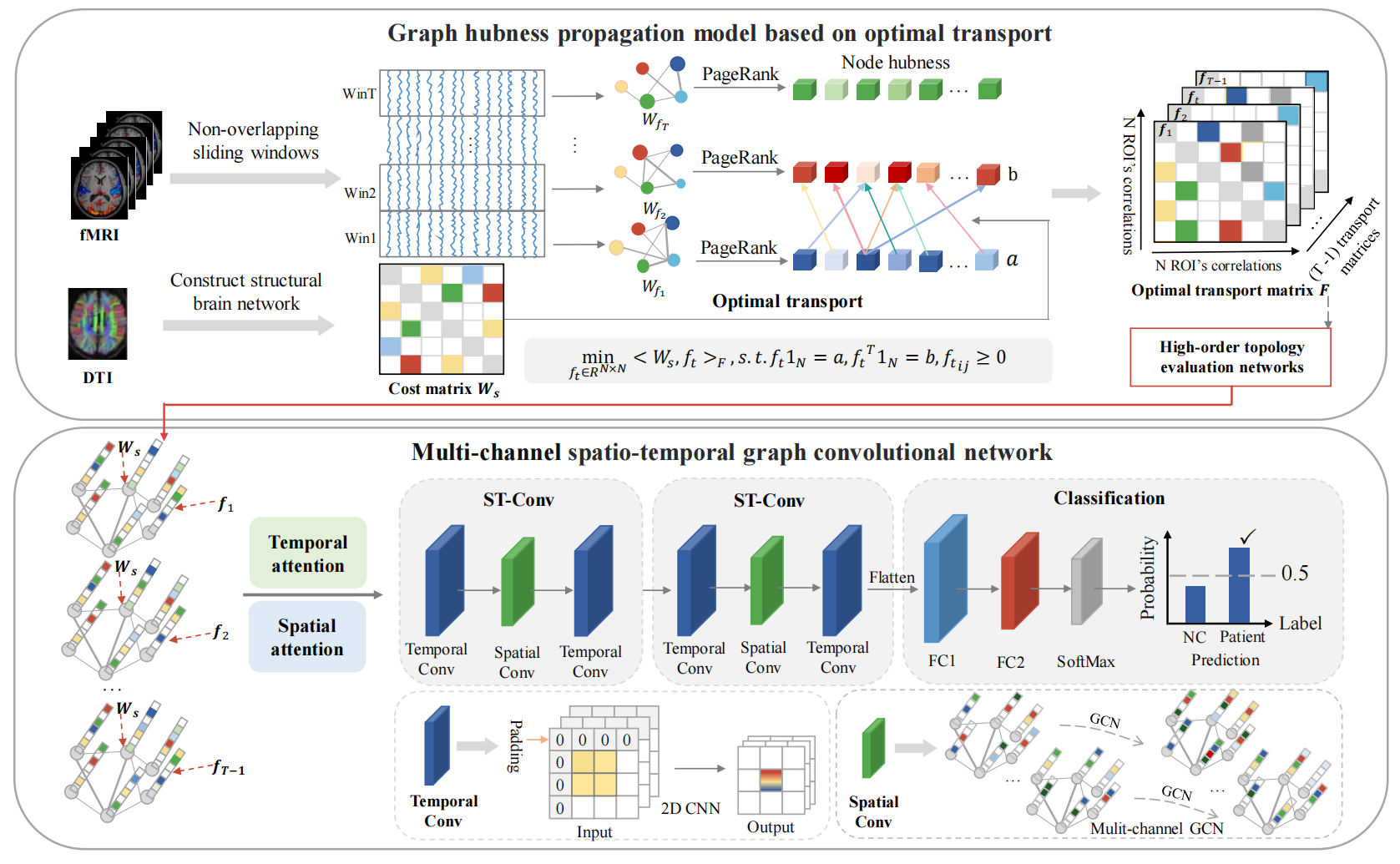
Spatio-Temporal Graph Hubness Propagation Model for Dynamic Brain Network Classification
In this paper, optimal transport (OT) theory is introduced to capture the topology evolution of dynamic brain networks, and a multi-channel spatio-temporal graph convolutional network is developed to collaboratively extract temporal and spatial features from the evolution networks.
Publications in this direction
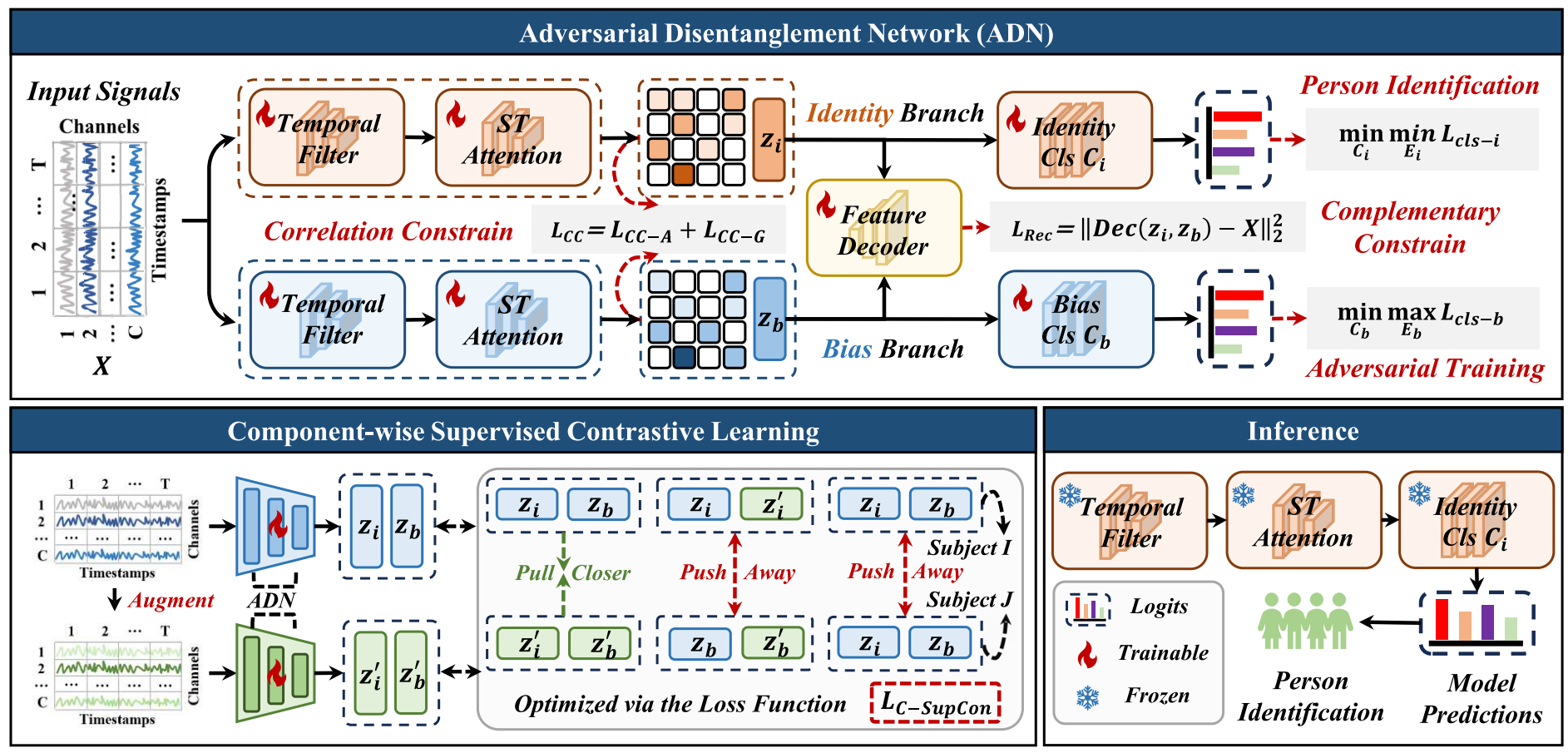
Disentangled Representation Learning for Robust Brainprint Recognition
This paper proposes a disentangled representation learning based identity recognition framework, which disentangles the EEG signal into intrinsic identity-related information and biased identity-invariant information, thus enhancing the performance of EEG biometrics.
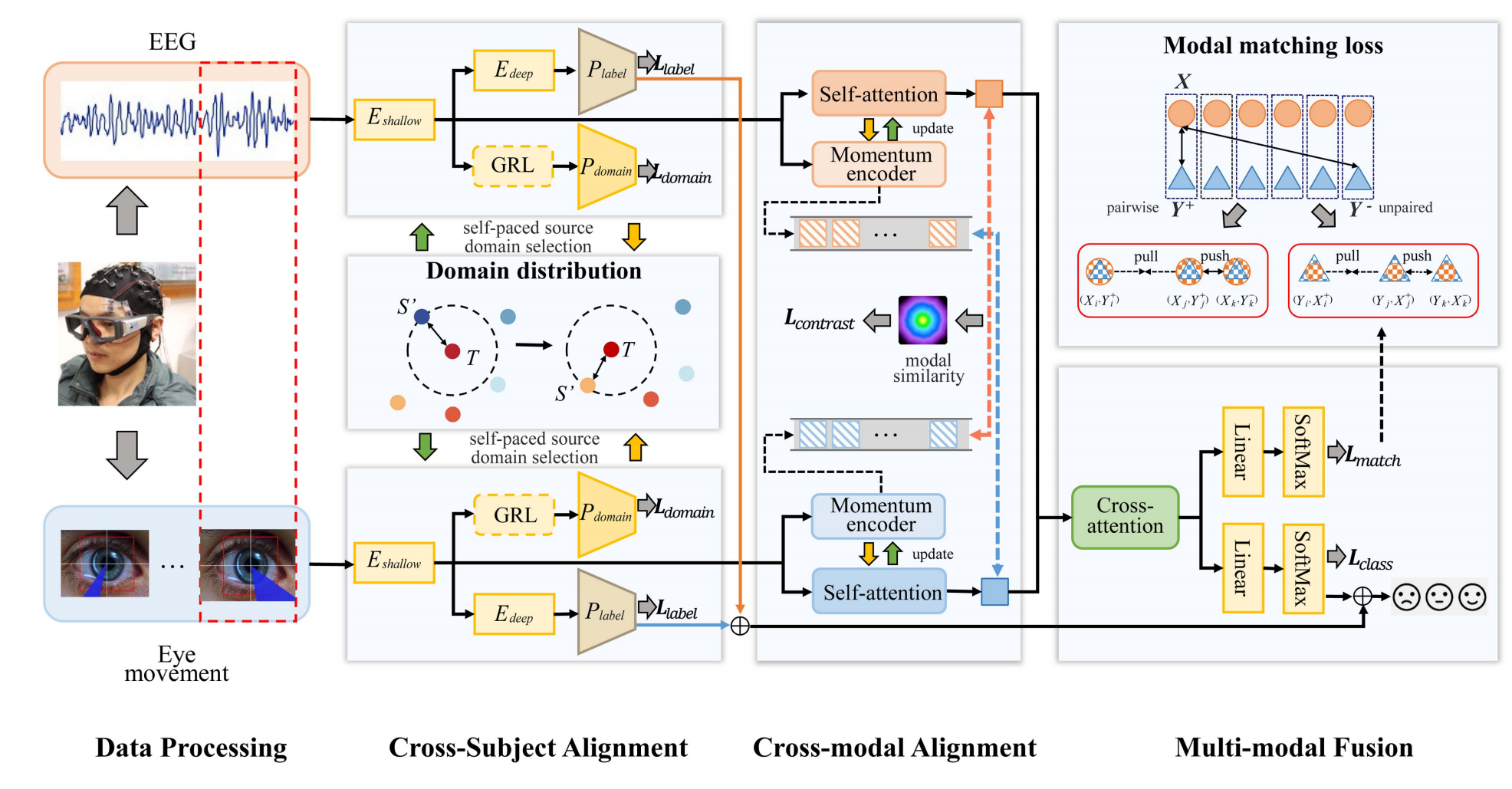
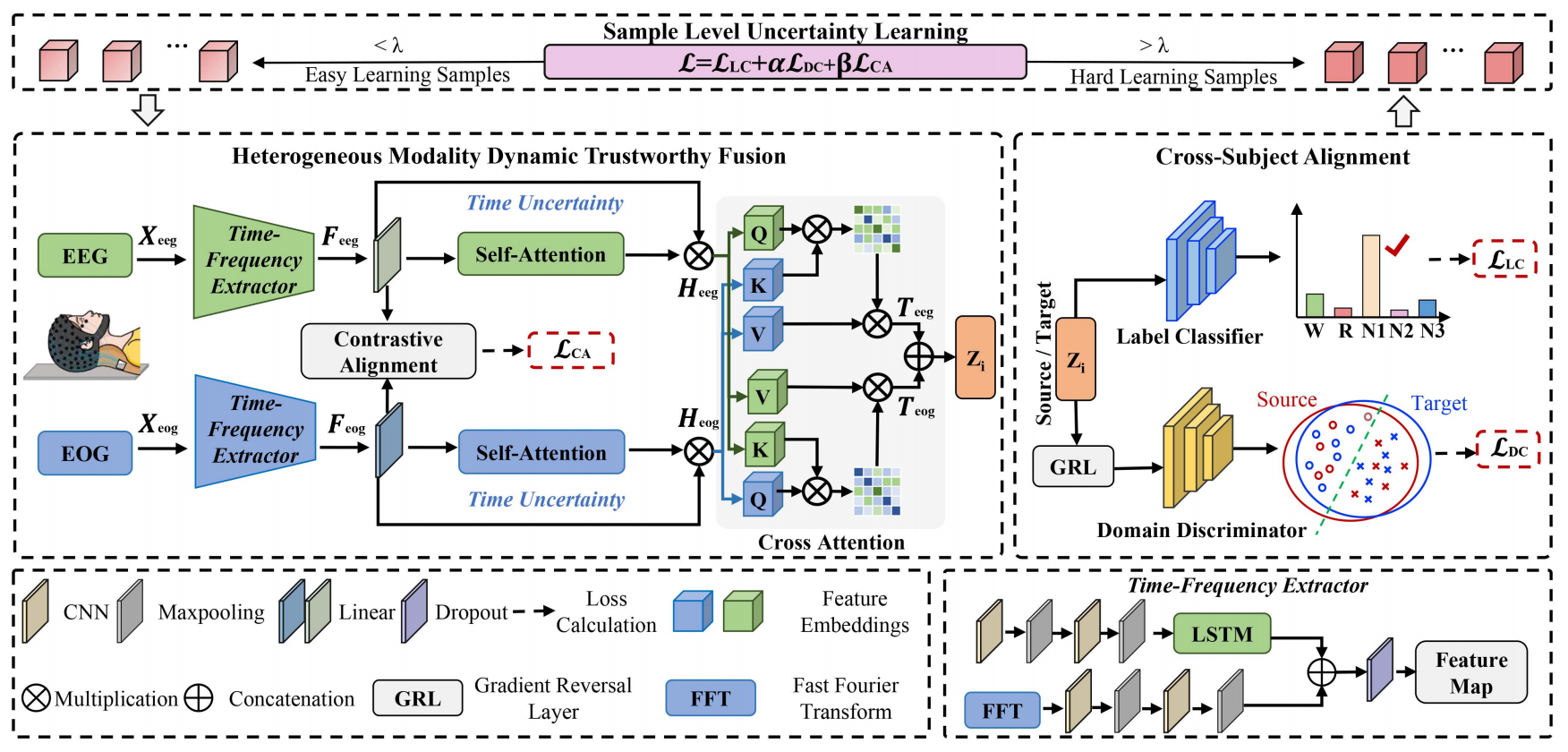
Multi-Modal Cross-Subject Emotion Feature Alignment and Recognition with EEG and Eye Movements
In this paper, a cross-subject multi-modal emotion recognition framework is proposed. The architecture jointly learns subject-independent representations and common features shared between EEG and eye movements.
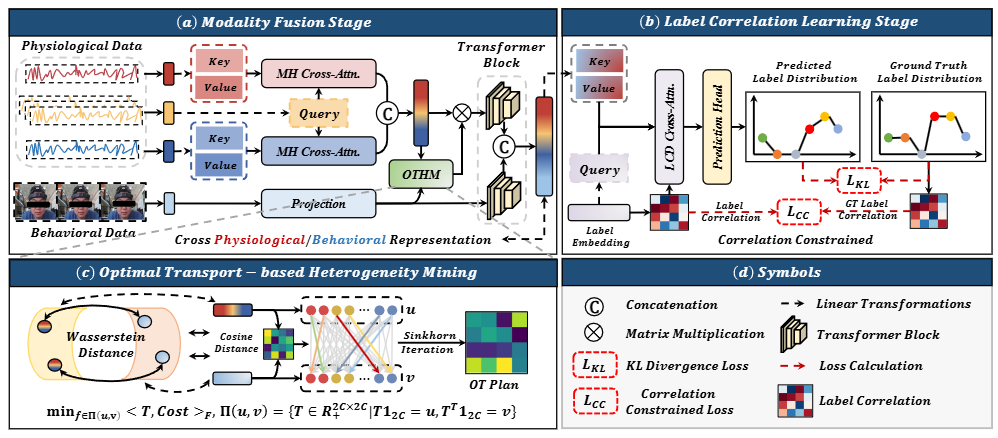
HeLo: Heterogeneous Multi-Modal Fusion with Label correlation for Emotion Distribution Learning
In this paper, a multi-modal emotion distribution learning framework is proposed, aiming to fully explore the heterogeneity and complementary information in multi-modal emotional data, as well as the label correlation within mixed basic emotions.
Publications in this direction
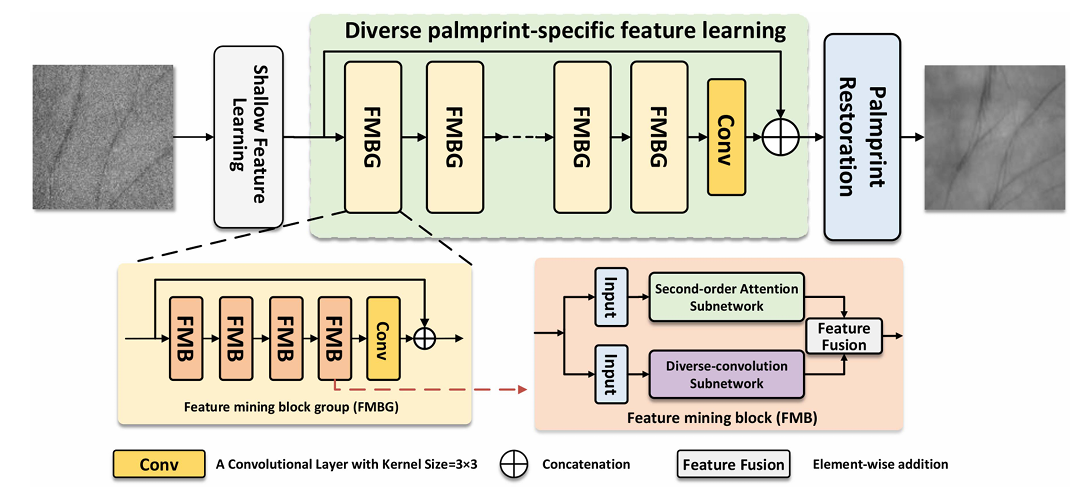
PalmMamba: Palm Intrinsic Features Learning Selective State Space Model for Palmprint Image Denoising
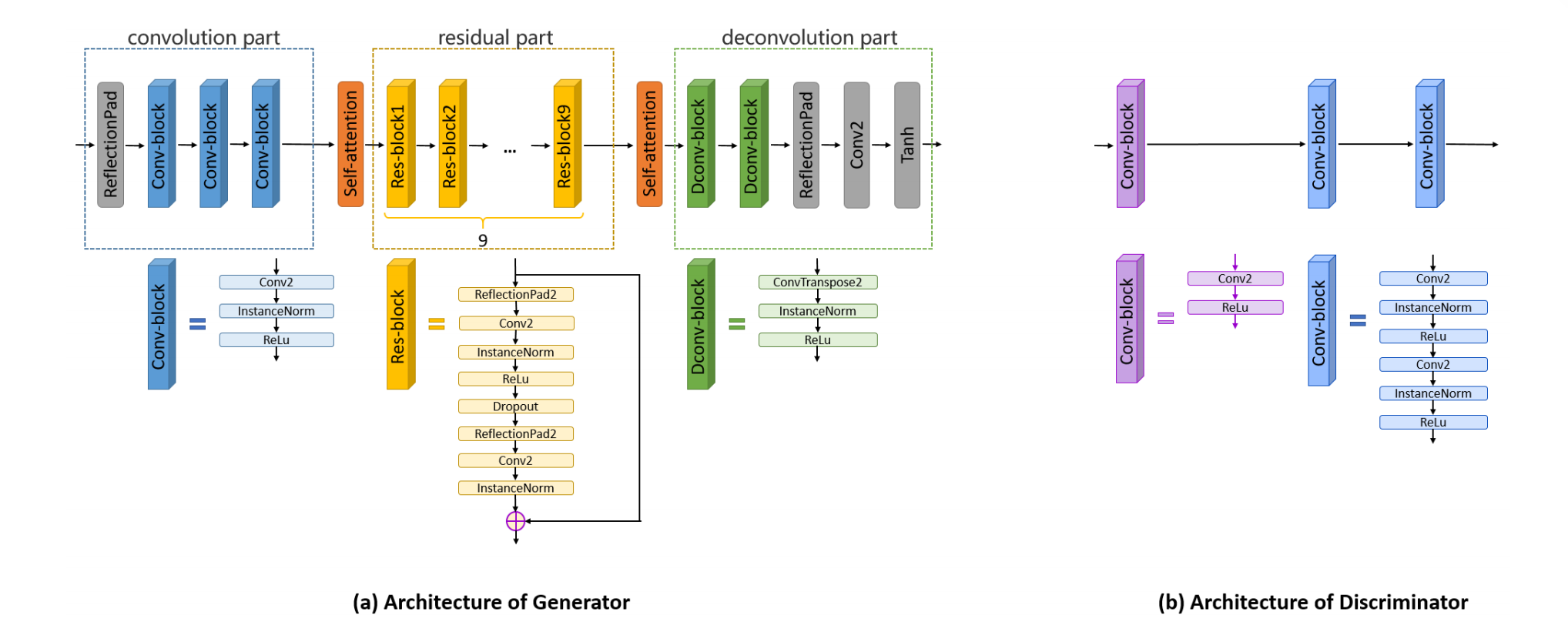
This paper proposes a palm intrinsic feature learning selective state space model for palmprint image denoising, integrating shallow feature representation, noise-insensitive palmprint-specific feature learning, and sharp palmprint image restoration in a unified framework.
Publications in this direction
- National-level Young Talent (国家级青年人才)
- Jiangsu Province "333" High-level Talent (江苏省333高层次人才)
- MOE Doctoral Academic Newcomer Award (教育部博士生学术新人奖)
- 3 provincial/ministerial science and technology awards (获省部级科技奖3项)
- Jiangsu Computer Society Teaching Newcomer Award & Teaching Achievement Award (江苏省计算机学会教学新秀奖/教学成果奖)
- Outstanding Reviewer, IEEE Transactions on Medical Imaging (IEEE TMI杰出审稿人)
Selected Student Awards (本组学生所获荣誉)
- Inaugural National Brain-Computer Interface Doctoral Outstanding Achievement Award (首届全国脑机接口博士生优秀成果奖)
- CAST Young Science and Technology Talent Cultivation Program (Doctoral Track) — formerly "Young Elite Scientist Sponsorship Program" (中国科协青年科技人才培育工程博士生专项计划)
- Jiangsu Computer Society Outstanding Master's Thesis Award — 3 times (2019, 2022, 2024) (江苏省计算机学会优硕论文奖)
- Jiangsu Artificial Intelligence Society Outstanding Master's Thesis Award (江苏省人工智能学会优硕论文奖)
- Jiangsu Artificial Intelligence Society Outstanding Master's Thesis Nomination (江苏省人工智能学会优硕论文提名)
- Shenzhen Kunpeng Youth Innovation Project (student-led) (深圳鲲鹏青年创新项目)
- Nanjing University of Aeronautics and Astronautics Qunxing Innovation Award (南京航空航天大学群星创新奖)
- China International College Students Innovation Competition ("Internet+") — National Gold Award (中国国际大学生创新大赛国赛金奖)
- China International College Students Innovation Competition ("Internet+") — Provincial First Prize
- China International College Students Innovation Competition ("Internet+") — Provincial Second Prize
- "Challenge Cup" Jiangsu Provincial Final — Grand Prize (挑战杯江苏省赛特等奖)
- NUAA Outstanding Master's Thesis; NUAA Outstanding Undergraduate Thesis Award; NUAA May Fourth Youth Award
- Asian Conference on Artificial Intelligence Technology Best Student Paper Award (亚洲人工智能技术大会最佳学生论文奖)
- International Conference on Artificial Intelligence and Education Best Paper Award (人工智能与教育学术会议最佳论文奖)
- International Conference PRMVIA Best Paper Award (国际会议PRMVIA最佳论文奖)
- Medical Computing Young Scholar Symposium Student Achievement Short-video Competition Award (医学计算青年研讨会学生成果短视频展示竞赛奖)
- CAST Bilingual Dissemination Project Paper for Scientific Journals (中国科协科技期刊双语传播工程论文)
- National Scholarship (国家奖学金)
Editorial Boards
- Youth Editorial Board, CAAI Transactions on Intelligence Technology (中科院1区), 2025–present
- Editorial Board, Computational Intelligence (SCI)
- Editorial Board, IJIG
- Guest Editor for several international journals
Professional Societies & Committees
- Executive Committee Member, CCF Technical Committee on Artificial Intelligence and Pattern Recognition
- Member, CAAI Technical Committee on Machine Learning
- Member, CAAI Technical Committee on Smart Healthcare
- Member, CSIG Technical Committee on Brain Atlas
- Vice Chair, Jiangsu Artificial Intelligence Society — Education Technical Committee
- Vice Chair, Jiangsu Artificial Intelligence Society — Youth Working Committee
Conference Roles
- Executive Chair, 5th Medical Image Computing Young Scholar Symposium (MICS2018)
- Chair, 2nd International Conference on Digital Media, Communications and Information Systems
- Chair, 4th International Conference on Artificial Intelligence and Education
- National Natural Science Foundation of China (NSFC) — 3 grants (主持国家自然科学基金3项),Principal Investigator.
- Defense application promotion project (GF应用推进课题),Principal Investigator.
- Sub-project of a National Key R&D Program (国家重大科技专项子课题),Principal Investigator.
- Jiangsu Natural Science Foundation (江苏省自然科学基金),Principal Investigator.
- 10+ research projects in total (共主持项目10余项).
Copyright © Qi Zhu